Challenges and Solutions in Resin Manufacturing
Explore resin manufacturing challenges including quality control, raw material costs, process optimization, waste management, compliance and resin R&D.
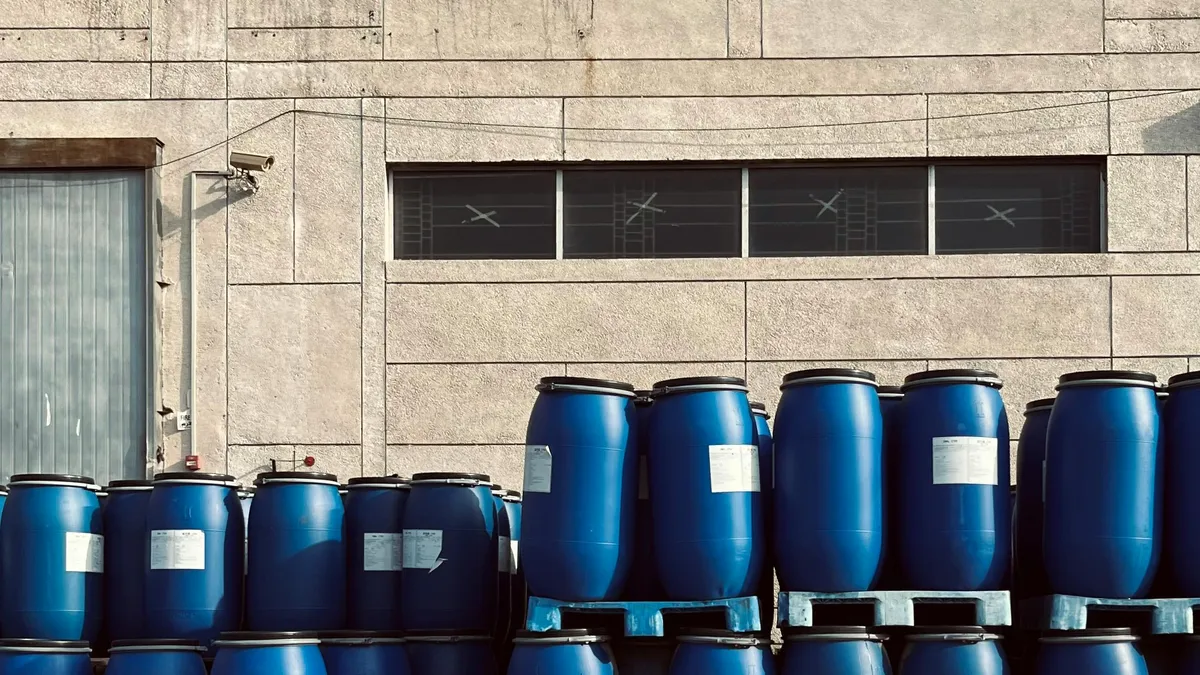
The resin industry plays an important role in the manufacturing of paints, coatings, printing inks, adhesives, construction materials and several specialty industrial products. As these industries demand better performance, consistency and cost efficiency, manufacturers are also facing increasingly complex resin manufacturing challenges.
Modern resin manufacturing challenges are not limited to chemical production alone. Manufacturers have to manage raw material availability, production costs, quality control, environmental requirements, process efficiency, waste management and changing customer expectations.
For buyers, these challenges matter because the quality of a resin directly affects the performance of the final formulation. A variation in viscosity, solid content, drying characteristics, adhesion or compatibility can impact the quality of a finished paint, coating, ink or adhesive.
Understanding the major resin manufacturing challenges can therefore help manufacturers improve their processes and help industrial buyers select a more reliable resin supplier.
What Are the Major Resin Manufacturing Challenges?
The production of synthetic and specialty resins involves controlled chemical reactions and carefully monitored processing conditions. Depending on the chemistry, manufacturers may need to control temperature, reaction time, raw material ratios, viscosity, acid value, amine value, solvent content and other parameters.
The most important resin manufacturing challenges include:
- Maintaining consistent resin quality
- Managing raw material costs
- Improving production efficiency
- Reducing manufacturing waste
- Controlling energy consumption
- Meeting regulatory requirements
- Developing application-specific products
- Maintaining reliable supply
- Providing technical support to customers
A combination of R&D, process optimization, quality assurance and manufacturing expertise is required to address these challenges effectively.
1. Maintaining Consistent Resin Quality
One of the biggest synthetic resin challenges is maintaining consistent quality from batch to batch.
Industrial customers usually require resin properties to remain within defined specifications. Variations in viscosity, colour, solid content, acid value, amine value, drying behaviour or solubility can affect the performance of the finished formulation.
This makes resin quality control an essential part of modern resin production.
A strong quality system can include:
- Raw material inspection
- Controlled reaction conditions
- In-process testing
- Laboratory analysis
- Final batch testing
- Retained batch samples
- Technical documentation
Uniform Synthetics states that its quality assurance system focuses on consistent resin quality and systematic batch-sample retention. Its current sustainability information also describes continuous monitoring of parameters including acid value, batch temperature, residual solvent, viscosity, colour and amine value.
For customers, consistent quality means fewer formulation adjustments and more predictable production performance.
2. Controlling Resin Manufacturing Cost
Raw materials are a major contributor to resin manufacturing cost. Changes in prices and availability of oils, fatty acids, rosin, solvents, acids, alcohols and other chemical inputs can influence the final manufacturing economics.
Manufacturers need to control costs without reducing the performance of the finished resin.
Practical approaches include:
- Optimizing raw material consumption
- Improving batch yields
- Reducing process losses
- Building reliable supplier relationships
- Maintaining appropriate inventory
- Improving production planning
- Evaluating technically suitable alternative raw materials
However, cost optimization should not mean simply selecting the cheapest raw material. A raw material change can affect drying, adhesion, colour, flexibility, hardness, compatibility or chemical resistance resin performance.
The better approach is to optimize the complete formulation and manufacturing process.
3. Improving Resin Process Optimization
Chemical reactions used for resin production require accurate process control. Temperature, reaction time, catalyst levels, raw material addition and mixing conditions can significantly affect the final product.
This is why resin process optimization is important for both quality and production efficiency.
Poor process control can lead to:
- Off-specification batches
- Longer production cycles
- Increased energy consumption
- Higher material losses
- Reprocessing
- Inconsistent product performance
Effective resin process optimization combines laboratory development, controlled scale-up and repeatable plant production.
Uniform Synthetics currently operates specialty resin manufacturing facilities across Vapi, Dadra and Sarigam, with its About page reporting monthly production capacity exceeding 1,700 metric tons.
A scalable production system allows manufacturers to move formulations from development into commercial manufacturing while maintaining process control.
4. Managing Industrial Resin Production Issues
Large-scale chemical production can create several industrial resin production issues, including equipment utilization, batch scheduling, raw material handling, heat management and production downtime.
Manufacturers need to balance production volume with flexibility because different customers may require different resin chemistries, viscosities, solvent systems and solid percentages.
Production efficiency can be improved through:
- Better batch scheduling
- Preventive equipment maintenance
- Improved reactor utilization
- Process monitoring
- Accurate material dosing
- Efficient heating and cooling
- Production planning based on demand
The objective is to manufacture more consistently while reducing unnecessary production time and material losses.
5. Resin Waste Management
Resin waste management is another major consideration for chemical manufacturers.
Waste can be generated through off-specification batches, excess raw materials, process residues, solvent losses and inefficient production planning.
Manufacturers can reduce waste by improving:
- Raw material dosing
- Process monitoring
- Batch planning
- Quality testing
- Equipment maintenance
- Material recovery
- Production efficiency
Uniform Synthetics' sustainability program describes process-water recovery, solvent recovery and a production approach designed around zero effluent discharge.
Effective resin waste management can therefore contribute to both environmental performance and manufacturing efficiency.
6. Improving Resin Plant Efficiency
Resin plant efficiency directly affects production costs, capacity utilization and resource consumption.
An efficient resin plant should aim to minimize unnecessary energy use, downtime, material losses and reprocessing.
Important areas include:
- Reactor utilization
- Energy management
- Process automation
- Production scheduling
- Preventive maintenance
- Quality monitoring
- Material handling
Improving resin plant efficiency can help manufacturers increase production reliability while maintaining consistent product quality.
7. Meeting Environmental and Regulatory Requirements
Environmental requirements are becoming increasingly important for chemical manufacturers.
This has increased demand for eco-friendly resin production, responsible waste management and more efficient use of energy and raw materials.
At the same time, manufacturers supplying international customers may need to provide appropriate regulatory and technical documentation.
Resin compliance can involve:
- Technical data sheets
- Safety data sheets
- Product specifications
- Regulatory documentation
- Raw material information
- Quality certificates
- Export-market requirements
Uniform Synthetics describes its sustainability approach around renewable inputs, solvent recovery, process-water recovery, natural-gas thermal systems, enclosed handling and continuous monitoring.
8. Resin R&D and Product Innovation
Customer requirements are becoming increasingly application-specific.
A paint manufacturer may require a resin with particular drying and gloss properties. A coating manufacturer may prioritize adhesion and durability. A printing ink manufacturer may need pigment wetting, printability and substrate adhesion.
This makes resin R&D an important part of the modern resin industry.
R&D can help manufacturers develop:
- New resin chemistries
- Modified resin grades
- Customized formulations
- Improved compatibility
- Better drying characteristics
- Enhanced adhesion
- Improved chemical resistance
- More efficient formulations
Resin innovation can therefore help manufacturers respond to changing market requirements.
Uniform Synthetics states that its R&D team develops and upgrades formulations to meet changing coating and industrial application requirements.
9. Resin Supplier Challenges
From a buyer's perspective, resin supplier challenges can become manufacturing challenges for the customer.
If a supplier cannot maintain consistent quality, reliable delivery or technical support, the customer may experience:
- Production delays
- Formulation variation
- Increased testing
- Requalification requirements
- Higher inventory requirements
- Customer complaints
This is why selecting a supplier should involve more than comparing prices.
An experienced resin supplier India can provide technical support, consistent products, documentation and application guidance in addition to material supply.
Resin Manufacturing for Different Applications
Different industries require different resin technologies.
Alkyd Resin
Alkyd resin technologies are widely used in paints and industrial coatings. Uniform Synthetics currently offers long-oil, medium-oil, short-oil and hammertone alkyd grades for applications including architectural finishes, primers, industrial enamels and protective coatings.
Polyamide Resin
Polyamide resin technologies are used in printing inks and epoxy systems. Uniform Synthetics offers dimer-fatty-acid-based polyamide grades for flexographic and gravure inks, including co-solvent and alcohol-soluble systems.
Ketonic Resin
Ketonic resin products can be used in flexographic and gravure inks, lacquers, screen inks and NC-based coatings.
Adhesive Resin
Adhesive resin technologies need to provide the required tack, compatibility, adhesion and durability for the intended application.
Epoxy Resin
Epoxy resin systems are used in protective coatings and other industrial applications, with curing-agent selection playing an important role in final performance. Uniform Synthetics currently offers phenalkamines, reactive polyamides and cycloaliphatic adducts for epoxy systems.
Polyurethane Resin
Polyurethane resin technologies are used in applications including printing inks and coatings where film formation, flexibility and adhesion are important.
How Can Resin Manufacturing Challenges Be Overcome?
The most effective approach to resin manufacturing challenges is to combine technical expertise with strong manufacturing systems.
Strengthen Quality Control
Consistent testing and batch monitoring reduce variation and help customers receive predictable products.
Invest in R&D
Continuous R&D supports new product development, customized formulations and performance improvements.
Optimize Manufacturing
Better process control, production planning and equipment utilization can improve efficiency.
Reduce Waste
Recovery systems and improved batch control can reduce unnecessary material losses.
Improve Technical Support
Customers should be able to discuss their application, substrate, formulation and performance requirements with the resin supplier.
Choosing a Resin Manufacturer in India
Companies looking for resin manufacturers in India should evaluate:
- Manufacturing capacity
- Product portfolio
- Quality assurance
- R&D capabilities
- Technical support
- Product consistency
- Documentation
- Application expertise
- Supply reliability
- Sustainability practices
Uniform Synthetics reports over five decades of experience and specialty resin manufacturing facilities in Vapi, Dadra and Sarigam.
Its product portfolio covers resin technologies for paints, coatings, inks, adhesives and other industrial applications.
For buyers looking for a synthetic resin manufacturer in India, this combination of manufacturing capability and application expertise can be important when qualifying a long-term supplier.
Conclusion
The industry faces many resin manufacturing challenges, but each challenge also creates an opportunity to improve manufacturing efficiency, product quality and customer service.
Better quality control can reduce batch variation. Process optimization can improve production efficiency. Waste reduction can improve resource utilization. R&D can support resin innovation and customized solutions.
For industrial buyers, the right supplier should provide more than a resin product. Technical expertise, consistent quality, reliable supply, documentation and application support can all contribute to a successful long-term partnership.
Frequently Asked Questions
1. What are the main resin manufacturing challenges?
The major resin manufacturing challenges include maintaining consistent quality, controlling raw material costs, improving production efficiency, reducing waste, meeting compliance requirements and developing application-specific resin formulations.
2. How can resin manufacturers improve resin quality?
Manufacturers can improve resin quality through raw material testing, controlled processing, laboratory analysis, batch monitoring, final product testing and systematic quality assurance.
3. Why is resin process optimization important?
Resin process optimization helps manufacturers improve batch consistency, reduce production losses, optimize energy consumption and improve overall manufacturing efficiency.
4. How can resin manufacturing waste be reduced?
Manufacturers can reduce waste through accurate raw material dosing, improved process control, better production planning, recovery systems and reducing off-specification batches.
5. What industries use synthetic resins?
Synthetic resins are used in paints, coatings, printing inks, adhesives, construction products and many specialty industrial applications.
6. How do I choose a resin manufacturer in India?
Compare manufacturing capacity, product range, quality systems, R&D capabilities, technical support, documentation, application expertise, supply reliability and sustainability practices.
7. Can resin manufacturers develop customized resin formulations?
Depending on their R&D and manufacturing capabilities, resin manufacturers can develop or modify formulations to meet specific requirements such as viscosity, solids, drying, adhesion, compatibility and other application properties.
8. What information should I provide when requesting a resin?
Provide the intended application, substrate, current formulation if relevant, required performance, solvent system, viscosity or solid-content requirement and expected consumption. This allows the technical team to recommend a more suitable grade.