Trends in Industrial Coatings and Resin Technology
Explore industrial coating resins trends, including advanced resins, corrosion resistance, UV protection, fast drying, sustainability and resin innovation.
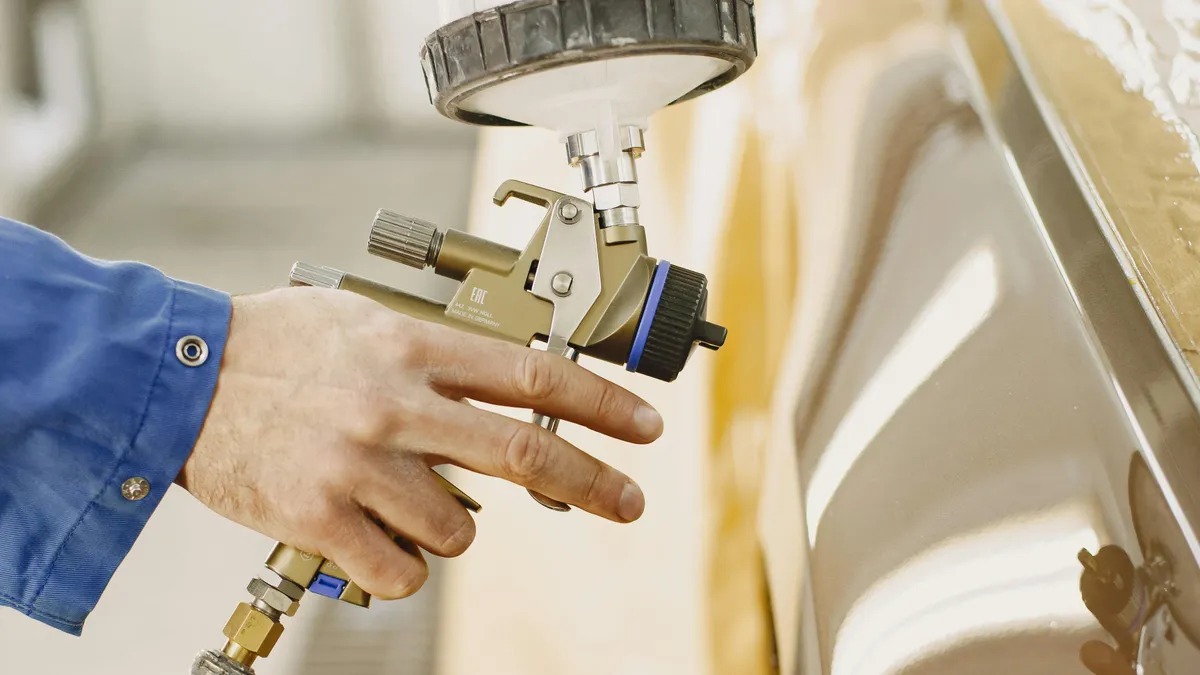
Industrial coatings are evolving rapidly as manufacturers demand better durability, corrosion protection, faster drying, improved adhesion and greater environmental performance. These changing requirements are driving significant industrial coating resins trends across automotive, metal protection, infrastructure, machinery, decorative and specialty coating applications.
Today's coating manufacturers are not simply looking for a resin that forms a film. They increasingly require coating systems that provide specific performance characteristics such as chemical resistance, flexibility, hardness, adhesion, gloss, weatherability and faster processing.
As a result, industrial coating resins trends are closely connected to advances in polymer chemistry, formulation technology, sustainability and application requirements.
For resin manufacturers, this creates opportunities to develop more specialized products. For coating manufacturers, understanding these trends can help them select the right resin technology for their formulations.
What Are the Major Industrial Coating Resins Trends?
The current industrial coating resins trends are being shaped by several key requirements:
- Higher corrosion resistance
- Faster drying
- Better UV and weather resistance
- Improved substrate adhesion
- Higher chemical resistance
- Lower environmental impact
- Greater formulation flexibility
- Improved coating durability
- Application-specific resin technologies
- More efficient manufacturing processes
These developments are pushing the market toward advanced coating resins that can deliver multiple performance benefits within a single formulation.
1. Advanced Coating Resins for High-Performance Applications
One of the most important industrial coating resins trends is the increasing demand for advanced coating resins.
Industrial customers often operate in demanding environments where conventional coatings may not provide sufficient protection.
Coatings used on machinery, metal structures, industrial equipment, automotive components and infrastructure may need to withstand:
- Moisture
- Chemicals
- Abrasion
- Temperature variation
- UV exposure
- Corrosive environments
- Mechanical stress
Advanced resin technologies can be formulated to improve specific properties such as adhesion, hardness, flexibility, durability and chemical resistance.
This is creating greater demand for high performance coating resins and specialty resin formulations rather than one-size-fits-all products.
2. Corrosion Resistant Resins for Metal Protection
Corrosion is one of the biggest challenges faced by industries using metal components and structures.
This makes corrosion resistant resins an important area of resin product development.
Protective coatings based on suitable resin systems can help protect metal surfaces against moisture, chemicals and environmental exposure.
The effectiveness of a corrosion-resistant coating depends on several factors, including:
- Resin chemistry
- Pigment selection
- Surface preparation
- Film thickness
- Crosslinking
- Application method
- Environmental exposure
This is why manufacturers searching for a corrosion resistant resin supplier should evaluate the complete coating formulation rather than selecting a resin based only on its name.
3. UV Resistant Coatings and Weatherability
Outdoor coatings are continuously exposed to sunlight and changing weather conditions.
As a result, UV resistant coatings are becoming increasingly important for architectural, automotive, infrastructure and industrial applications.
UV exposure can contribute to:
- Colour fading
- Surface degradation
- Loss of gloss
- Film cracking
- Brittleness
- Reduced coating life
Resin selection can influence the coating's ability to withstand outdoor exposure.
The growing demand for durable outdoor finishes is therefore another important part of industrial coating resins trends.
For manufacturers, the right resin should be evaluated alongside pigments, additives, curing systems and other formulation components.
4. Fast Drying Resins for Higher Production Efficiency
Manufacturing efficiency is another major driver of resin innovation.
Coating manufacturers increasingly want fast drying resins that can reduce production cycle times and improve handling or recoating speed.
Faster drying can be particularly valuable in:
- Industrial enamels
- Metal coatings
- Machinery coatings
- Automotive components
- Maintenance coatings
- General industrial finishes
However, faster drying should not compromise adhesion, flexibility, gloss or durability.
The challenge for resin manufacturers is therefore to develop products that provide a practical balance between drying speed and final coating performance.
This is one reason industrial resin innovation is increasingly focused on application-specific resin design.
5. Automotive Coatings Resin Technology
The automotive sector has highly demanding coating requirements.
An automotive coatings resin may need to contribute to properties such as:
- Adhesion
- Gloss
- Surface appearance
- Durability
- Chemical resistance
- Weather resistance
- Flexibility
Automotive coatings also need to work within carefully controlled application and curing processes.
As automotive manufacturing develops, coating technologies are also evolving. Resin manufacturers therefore need strong R&D capabilities to develop products suitable for increasingly specialized applications.
This makes automotive coating resin manufacturers a valuable commercial search category for companies supplying specialized resin technologies.
6. Architectural Coatings Resin Developments
Architectural coatings require a different balance of performance compared with heavy-duty industrial coatings.
An architectural coatings resin may need to support:
- Decorative appearance
- Colour retention
- Adhesion
- Weatherability
- Drying
- Surface durability
Demand for better-performing decorative finishes is encouraging resin manufacturers to develop products that provide improved application characteristics while maintaining durability.
The growth of specialty formulations is therefore another important aspect of industrial coating resins trends.
7. Protective Coatings Resin for Industrial Applications
Industrial equipment, machinery, pipelines, structural steel and other assets often require coatings designed specifically for protection.
A protective coating resin needs to work as part of a system designed to withstand the environment in which the asset operates.
Depending on the application, the coating may require:
- Corrosion protection
- Chemical resistance
- Abrasion resistance
- Water resistance
- Strong adhesion
- Long-term durability
This has increased demand for protective coating resin supplier searches among industrial buyers looking for technically suitable resin systems.
8. Resin Additives and Formulation Optimization
Resin performance cannot be considered independently from the rest of the formulation.
Resin additives can influence properties such as:
- Flow
- Wetting
- Foam control
- Surface appearance
- Stability
- Drying
- Slip
- Levelling
The interaction between resin, pigment, solvent and additives is therefore an important part of coating formulation.
For this reason, coating manufacturers increasingly need suppliers who understand the complete formulation rather than only selling a raw material.
9. Sustainable Coating Resins
Sustainability is one of the most significant industrial coating resins trends.
Coating manufacturers are increasingly evaluating opportunities to reduce environmental impact through:
- Renewable raw materials
- Lower-emission formulations
- Improved energy efficiency
- Reduced waste
- Longer coating life
- More efficient application
This is increasing demand for sustainable coating resins.
However, sustainability needs to be balanced with technical performance. A coating must still provide the durability, adhesion and resistance required by the application.
The future of coating technology will therefore involve both performance and responsible manufacturing.
10. Powder Coatings Resin Technology
Powder coatings are another important area of development in industrial finishing.
Powder coatings resin systems are used in applications where manufacturers want durable finishes and efficient application processes.
Powder coating technologies can offer advantages such as:
- Durable finishes
- Efficient material utilization
- Consistent film formation
- Industrial-scale application suitability
As demand for efficient coating technologies develops, powder coating chemistry continues to be an important area of resin product development.
11. Polyamide Resin in Industrial Coating Applications
Polyamide resin is another important resin technology used across industrial applications, particularly in printing inks and epoxy-related systems.
Polyamide technologies can provide properties such as adhesion, flexibility and compatibility depending on the specific grade and formulation.
For epoxy systems, polyamide-based curing technologies can be used where flexibility, adhesion and durability are required.
Uniform Synthetics offers polyamide-based products for printing inks and epoxy curing systems, making this chemistry relevant to manufacturers looking for specialty resin technologies.
12. Epoxy Resin and Protective Coating Performance
Epoxy resin systems are widely associated with industrial protective coatings because of their adhesion, hardness and chemical resistance characteristics.
Epoxy systems can be used in areas such as:
- Industrial flooring
- Metal protection
- Machinery coatings
- Infrastructure
- Chemical-resistant coatings
- Heavy-duty protective systems
The curing agent is also critical to final performance.
Uniform Synthetics offers epoxy curing technologies including reactive polyamides, phenalkamines and cycloaliphatic adducts for industrial applications.
This demonstrates why resin selection and curing-system selection need to be considered together.
13. Polyurethane Resin for Flexible and Durable Coatings
Polyurethane resin technology is another important part of modern coating formulations.
Depending on the specific chemistry, polyurethane systems can provide a combination of:
- Flexibility
- Abrasion resistance
- Gloss
- Adhesion
- Chemical resistance
- Weatherability
This makes polyurethane technologies relevant to demanding industrial and specialty coating applications.
As customers increasingly seek coatings with multiple performance properties, polyurethane continues to be an important area of resin innovation.
14. Alkyd Resin Remains Important for Industrial Coatings
Despite the development of newer coating technologies, alkyd resin remains an important resin chemistry for many industrial and decorative coating applications.
Alkyd systems can offer useful characteristics such as:
- Good flow
- Surface appearance
- Adhesion
- Drying performance
- Cost-effectiveness
Uniform Synthetics offers long-oil, medium-oil, short-oil and hammertone alkyd grades for different coating applications.
This demonstrates that the future of industrial coatings will not necessarily be about replacing traditional resin chemistries. Instead, it will involve optimizing established technologies and developing them for new performance requirements.
Resin Product Development Is Becoming More Application-Specific
A major part of current industrial coating resins trends is the shift toward application-specific development.
Instead of asking only:
“Which resin should we use?”
formulators increasingly ask:
- What substrate are we coating?
- What environment will the coating face?
- How quickly must it dry?
- What chemical resistance is required?
- Is UV exposure involved?
- What application equipment will be used?
- What curing conditions are available?
- What sustainability requirements apply?
These questions allow resin manufacturers to recommend a more appropriate technology.
This is why resin product development increasingly involves collaboration between resin manufacturers, coating formulators and end users.
What Should Buyers Look for in an Industrial Coating Resin Manufacturer?
Companies searching for industrial coating resin manufacturers in India should evaluate more than product price.
Important factors include:
Manufacturing Capability
A reliable supplier should have appropriate manufacturing infrastructure and production capacity.
Quality Control
Consistent raw materials, controlled production and final-batch testing are important for formulation consistency.
R&D Capability
A strong R&D team can help develop or modify resin grades according to specific requirements.
Technical Support
Technical assistance can be particularly valuable when a customer is experiencing compatibility, drying, adhesion or performance issues.
Product Portfolio
A broad portfolio covering alkyd, polyamide, epoxy, polyurethane and specialty resin technologies can help customers identify the appropriate chemistry.
Supply Reliability
Consistent supply and predictable lead times are important for industrial production.
The Future of Industrial Coating Resin Technology
The next generation of coating technologies will likely focus on the combination of performance, efficiency and sustainability.
Key developments are expected around:
- High-performance resin systems
- Faster drying
- Improved corrosion resistance
- Better UV stability
- Lower-emission formulations
- Sustainable raw materials
- Application-specific resin design
- Advanced additives
- Improved compatibility
- Longer coating service life
These developments will continue shaping industrial coating resins trends in the coming years.
For resin manufacturers, this means investment in R&D and manufacturing technology will become increasingly important.
For coating manufacturers, it means selecting a supplier capable of understanding both resin chemistry and the final application.
Choosing the Right Industrial Coating Resin Supplier
When looking for industrial coating resin suppliers, buyers should provide as much application information as possible.
Useful information includes:
- Coating type
- Substrate
- Application method
- Solvent system
- Drying requirement
- Required gloss
- Chemical resistance
- Flexibility
- Hardness
- Outdoor exposure
- Expected production volume
This information enables the supplier's technical team to recommend a more suitable resin.
Uniform Synthetics provides a Product Finder where users can search resin products according to chemistry, application, grade and performance requirements.
For companies looking for coating resin manufacturers in India, this type of product-selection system can simplify the initial technical evaluation.
Conclusion
The future of industrial coatings will be driven by performance, efficiency and sustainability.
The most important industrial coating resins trends include advanced coating technologies, corrosion resistance, UV protection, faster drying, application-specific development and sustainable formulations.
At the same time, established chemistries such as alkyd, epoxy, polyamide and polyurethane continue to play important roles.
For coating manufacturers, selecting the right resin is becoming increasingly important because resin chemistry directly influences the performance and processing characteristics of the final coating.
Working with an experienced industrial coating resin manufacturer can help companies evaluate the right resin technology, troubleshoot formulation challenges and develop products suited to specific applications.
Frequently Asked Questions
1. What are the major industrial coating resins trends?
The major industrial coating resins trends include advanced performance, corrosion resistance, UV resistance, fast drying, sustainable formulations, application-specific resin development and improved coating durability.
2. What are advanced coating resins?
Advanced coating resins are specialty resin systems developed to deliver specific performance characteristics such as improved adhesion, chemical resistance, durability, flexibility, weatherability or faster drying.
3. Which resins are commonly used in industrial coatings?
Common resin technologies include alkyd resin, epoxy resin, polyurethane resin and polyamide resin, depending on the coating application and required performance.
4. What are corrosion resistant resins used for?
Corrosion resistant resins are used in coating systems designed to protect metal surfaces from moisture, chemicals and corrosive environments.
5. Why are fast drying resins important?
Fast drying resins can help reduce production cycle times, improve handling and potentially increase coating-line efficiency.
6. What are sustainable coating resins?
Sustainable coating resins are resin technologies developed or manufactured with sustainability considerations such as renewable feedstocks, improved resource efficiency, waste reduction or lower-emission formulation requirements.
7. Are alkyd resins still used in industrial coatings?
Yes. Alkyd resin remains an important chemistry for many industrial and decorative coating applications because of its useful combination of appearance, adhesion, drying and cost characteristics.
8. What information should I provide when looking for an industrial coating resin?
Provide the substrate, coating type, application method, solvent system, drying requirement, hardness, flexibility, chemical resistance, outdoor exposure and expected production volume.
9. How do I choose an industrial coating resin manufacturer in India?
Evaluate manufacturing capacity, quality systems, R&D capabilities, technical support, product range, application expertise, supply reliability and ability to customize or recommend suitable resin grades.
10. Can resin manufacturers develop customized coating resins?
Depending on their R&D and manufacturing capabilities, resin manufacturers may develop or modify grades according to requirements such as drying, adhesion, viscosity, solids, flexibility, hardness and chemical resistance.